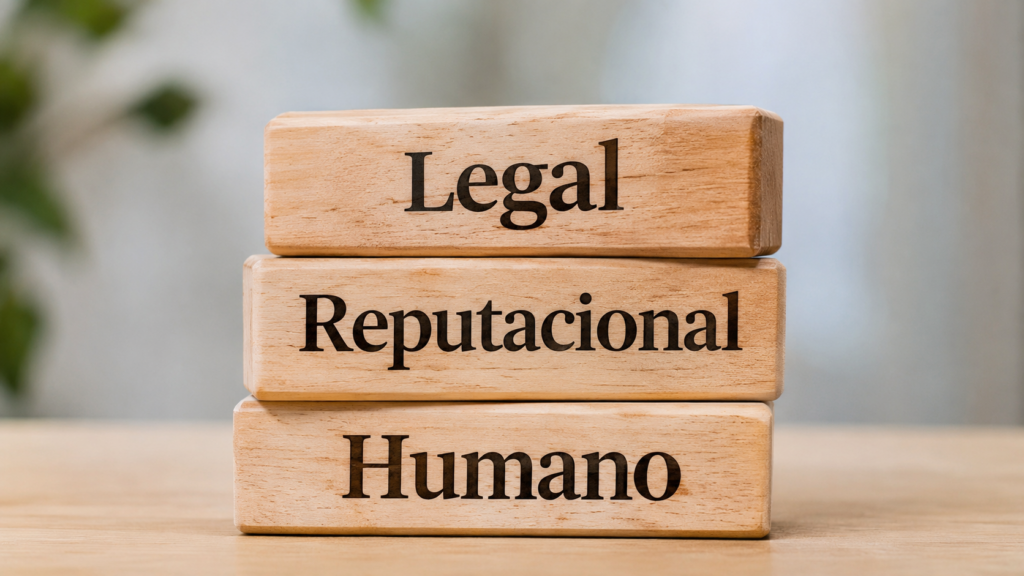
Image created using ChatGPT
When a company considers using artificial intelligence responsibly, a question often comes up at management level. What will it bring us, and how much will it cost? Training, internal policies and process reviews require time and resources, so it is reasonable to ask what the company stands to gain.
The answer goes beyond avoiding fines or reputational damage. Using AI with clear criteria helps reduce risks, improve the quality of work and give people a better understanding of what they can do with these tools, what they need to check and when they should stop and exercise their own judgment.
In my experience, this last aspect often receives less attention than it deserves. We talk a great deal about what artificial intelligence can do for a company, but much less about the conditions an organisation needs to put in place to use it well.
Legal: address compliance before problems arise
The European Artificial Intelligence Act, known as the AI Act, establishes obligations for the different actors that develop, market or use AI systems. Some obligations already apply, including AI literacy requirements, applicable since February 2025, and the transparency obligations under Article 50, which begin to apply in August 2026. Other requirements, such as certain obligations for high-risk systems, have later deadlines. Penalties depend on the infringement and can reach 3% of global annual turnover in certain cases, and up to 7% for prohibited AI practices.
The AI Act does not replace the General Data Protection Regulation (GDPR) or the other rules that already apply to business activities. If someone enters customer, employee or supplier information into an AI tool, the organisation must assess what data is being used, for what purpose and under what conditions.
Companies therefore need to know which tools are being used, who is authorised to approve new uses and how to train the people working with them. They also need to be able to explain how certain decisions were made and what steps were taken to manage the associated risks.
The aim is not to produce documentation simply to store it in a folder. It is to ensure that decisions about AI have a clear basis and that the organisation can demonstrate that it has exercised appropriate diligence.
Compliance is essential, but stopping there would reduce responsible AI to a legal issue. Its value to a company goes much further.
Reputational: trust is built through actions
A client’s trust can be lost because of a decision the company never expected to have to make. This can happen if their data is used without appropriate safeguards, if they receive an AI-generated response that no one has reviewed, or if they discover that an automated process affects their interests without having been properly informed.
In these situations, the problem is not just the error itself. It also concerns how it happened, what controls were in place and how the organisation responds once it identifies the issue.
A company that knows which tools it uses, can explain its decisions and sets clear boundaries demonstrates a more robust way of working. Not because it can guarantee that mistakes will never happen, but because it has ways to prevent some errors, detect others and respond when something goes wrong.
There is also a question of consistency. It makes little sense to talk about responsible innovation externally while, internally, employees use tools without understanding their conditions, share data without sufficient care or accept outputs without checking them.
A company’s reputation is shaped not only by what it communicates, but above all by the decisions it makes and the way it works every day.
Human: the benefit that almost no one measures
One aspect is often missing from conversations about the return on investment in AI. How does someone feel when they are expected to use a technology that can affect their work, but no one has explained what information they can share, which outputs they should check or which decisions should never be delegated?
In my experience, one of the difficulties of introducing new technologies is precisely this lack of clarity. Teams are expected to take advantage of AI, but they are not always given the time, training or guidance they need to do so confidently and responsibly.
Someone may end up using a tool without knowing whether they are using it appropriately. They may avoid it for fear of making a mistake, or rely too heavily on its outputs because they are unaware of its limitations. None of these situations helps an organisation integrate the technology responsibly.
Giving people clear criteria changes that relationship with AI. It means explaining which uses make sense, what information requires special care, how to check an output and when to rely on human expertise and judgment. It also means helping people understand how they will be supported in managing these responsibilities. They need to know they are not expected to work everything out on their own.
The aim is not simply to hand out a list of prohibitions and expect everyone to follow it. It is to help people understand the reasons behind decisions and apply that understanding when new situations arise.
This also has consequences for the company. When people understand what they are doing and why, they are better equipped to identify errors, ask questions and improve processes. Training cannot guarantee that everything will go well, but it helps people work with a clearer understanding of the risks and their own responsibilities.
Behind every tool are decisions that remain ours to make
Artificial intelligence can help us prepare reports, analyse information, respond to enquiries and streamline tasks. But introducing a tool does not, by itself, answer the questions an organisation needs to consider before using it.
Why do we need it? What information will we enter? How will we check the results? What are the consequences of an error? Who should review the output before it is used? What are we not willing to delegate?
These questions matter because the same tool can be used in very different ways. It might help someone organise information and devote more time to tasks that require their expertise. Or it might become a way to produce documents no one reviews and make decisions no one stops to question.
The difference also depends on the company’s objectives, the criteria it establishes and how well it prepares the people who will use the technology.
This is where the quality of work comes in. A quick answer is not necessarily a good one, and a well-written document does not guarantee accurate information. If teams use AI outputs without checking them, the company may end up producing more content without improving what it delivers to customers.
Using AI with sound judgment means knowing where it can add value, checking what it produces and recognising when human knowledge is needed. Efficiency matters, but it should not be measured solely by the time saved. The quality of the result and the consequences of using it matter too.
That is why responsible AI is also about values. What is a company willing to do with this technology? What boundaries does it set? How does it account for the people affected by its decisions? These are not abstract principles separate from the business. They are part of how the organisation works.
What a company really gains by adopting responsible AI
A company that develops the ability to use AI responsibly is not buying a guarantee against every problem that might arise. It is building a capability that helps it make better decisions as the technology continues to evolve.
That capability requires appropriate tools, clear processes, training and well-defined responsibilities. It also requires reviewing existing practices as the technology and the organisation’s needs change.
The result is an organisation better prepared to manage risks, explain its decisions and benefit from AI without relying solely on individual employees to work out what is appropriate.
There is another benefit. When teams understand how to use these tools and have clear criteria to guide their decisions, responsible AI stops being a document that people sign and becomes part of everyday work.
Responsible AI does not eliminate uncertainty or guarantee that a company will never make mistakes. It helps people make more informed decisions, take responsibility for their actions and learn when something does not work as intended.
In a context where tools are constantly changing, that ability is worth far more than familiarity with any single application.
Frequently asked questions
What are the benefits of responsible AI for a company?
Responsible AI helps companies manage legal risks, protect the trust of customers and partners, and improve the quality of their processes. It also helps teams understand the limitations of AI and recognise when they need to verify outputs or exercise human judgment.
Is responsible AI just a matter of legal compliance?
No. Regulatory compliance is essential, but companies also need to consider the quality of work, data protection, team training and the consequences of AI-supported decisions. Responsible AI needs to be integrated into everyday business activities.
Where should a company start if it wants to use AI responsibly?
Start by identifying which tools are being used, what they are used for, what information is shared with them and what risks they may introduce into business processes. From there, establish clear criteria for use, define responsibilities and train the people who work with AI. A clear AI policy helps, but it needs to be supported by training and procedures that teams can apply in practice.